Growing & Milestones
Why Babies Transfer Objects Hand To Hand
Passing a toy from one hand to the other is a small act that requires both sides of the brain to coordinate, which is why it appears at a predictable stage.
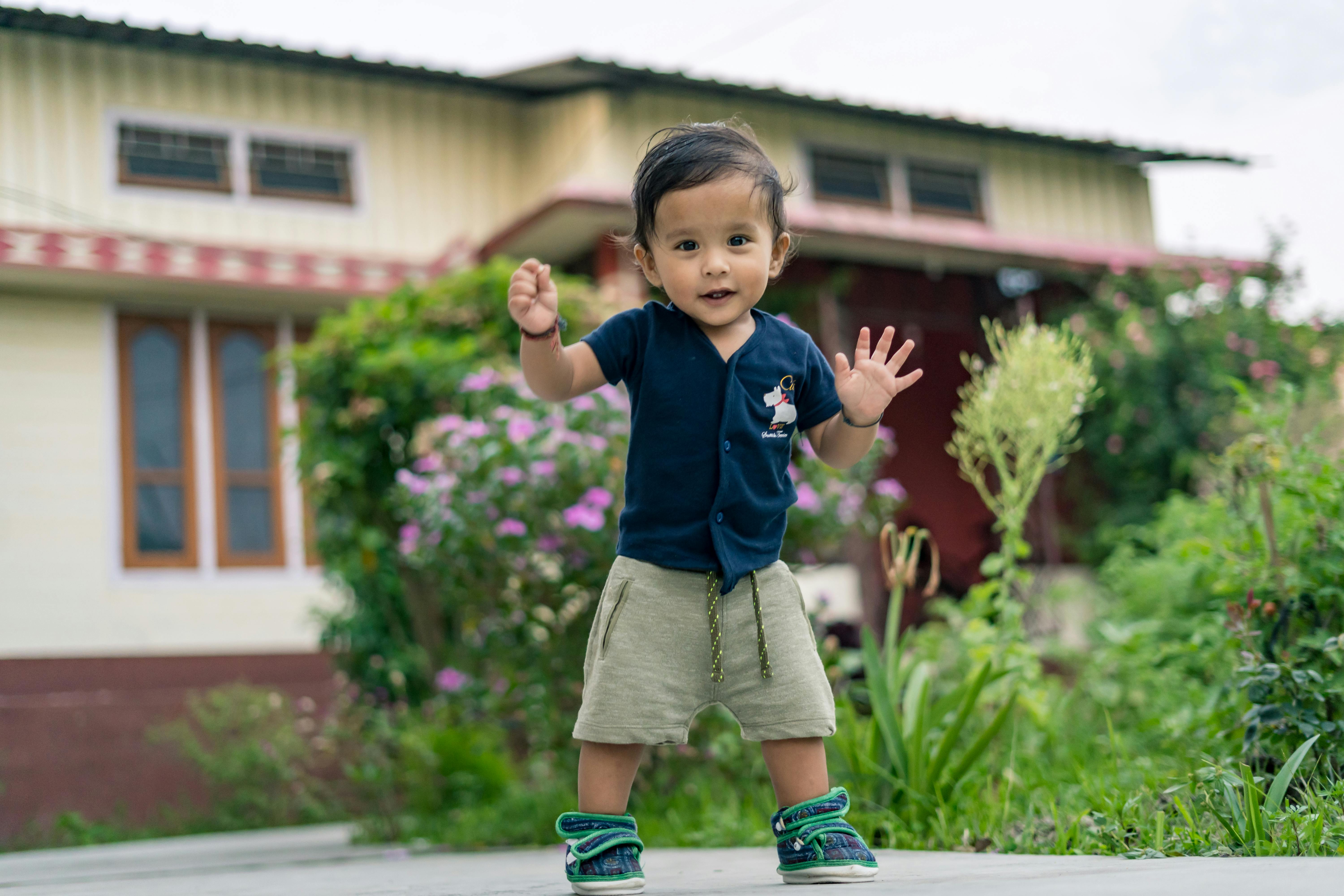
Somewhere in the middle of the first year a baby starts moving objects deliberately from one hand to the other. The behavior is unremarkable to watch and structurally demanding to perform.
The two hands are run by opposite hemispheres
Control of each hand originates largely in the opposite side of the brain. Moving an object between them requires those two sides to coordinate their actions in sequence.
The connecting structures between hemispheres continue developing through infancy, and improvements in cross-body coordination broadly track that development.
This is why transfer appears later than grasping. Holding is a one-sided task; handing over requires two systems to agree on timing.
Releasing is harder than grasping
Early grasping is heavily reflexive, and a young infant closing on an object cannot readily open again on command. Voluntary release develops after voluntary grasp.
A transfer requires both at once: one hand must close while the other opens, with a brief overlap where both are holding.
That overlap is what makes it a genuine milestone rather than a dropped object being picked up. The object never leaves the baby's control.
Crossing the midline is a related step
Reaching across the body's center line with one hand is another marker clinicians note, and it shares the same underlying requirement of coordinating across hemispheres.
Before that develops, a baby tends to reach for objects on the right with the right hand and on the left with the left, which limits what can be done with either.
Transfer offers a way around the constraint. An object picked up on one side can be moved to the other hand and used there.
It changes what a baby can investigate
Once objects can move between hands, they can be turned, examined from multiple angles and explored with the mouth while the other hand repositions them.
Two-handed manipulation opens up whole categories of play, including banging objects together, which requires holding two things and controlling both.
The behavior therefore has consequences beyond itself. It is a prerequisite for much of what looks like exploration during the second half of the first year.
Why a strong early hand preference draws attention
Consistent hand dominance typically emerges later than infancy, and a marked preference during the first year is something pediatricians ask about.
The reason is that a strong early preference can reflect reduced use of the other side rather than a positive choice, which is a different observation.
This is an example of a milestone whose absence or asymmetry matters more than its exact timing, and it belongs in a conversation with the pediatrician rather than a comparison with other children.
Questions readers ask
Is a low percentile a problem?
Not in itself. A large number of entirely healthy babies sit on lower lines. What professionals watch is the trend, and any concern should be raised with them.
Should I plot measurements myself between appointments?
It generally adds anxiety rather than information, partly because home measurement is noisy. If you want more frequent checks, discuss it with your health visitor.
Also by Shalu Prasad
- The fourth trimester is a framing, not a diagnosis, and it helps anywayThe Newborn Weeks
- Nobody warns you about the two-week visitor waveThe Newborn Weeks
- The first fortnight at home is a logistics problem nobody set up for youThe Newborn Weeks
- Crying often peaks in the early weeks before it easesThe Newborn Weeks