Feeding
Whether Milk Needs Warming, And Why People Think It Does
Warming a bottle is a habit built on comfort and familiarity rather than digestion, though temperature does change how readily some babies accept a feed.

Warming a bottle is one of the most entrenched routines in early feeding. The physiological case for it is much weaker than the behavioural one, and the two often get confused.
Body temperature is the reference the baby knows
Milk taken directly from the breast arrives at body temperature, so a baby who has fed that way has a strong reference point. A cold bottle is a departure from something familiar rather than something harmful.
Babies who have been bottle-fed from the start often show no preference at all, because they have no warmer comparison. Preference is learned, which is why it varies so widely between babies in the same family.
This matters practically. A baby who accepts room-temperature milk gives a family far more flexibility away from home, and that flexibility is worth something on its own.
Digestion is not the reason
Cold milk does not sit undigested, and a baby's stomach warms its contents quickly. The idea that warmth aids digestion is folk reasoning rather than a described mechanism.
What cold milk can do is prompt a slower start to a feed, because a baby who is surprised by the temperature may pause or fuss. That reads as a digestive problem to an adult watching, but it is a pacing effect.
Very cold milk straight from the back of a fridge is a bigger step than milk left to stand briefly. Most of the difference people notice sits between fridge-cold and room temperature, not between room temperature and warm.
How milk is warmed carries the actual risk
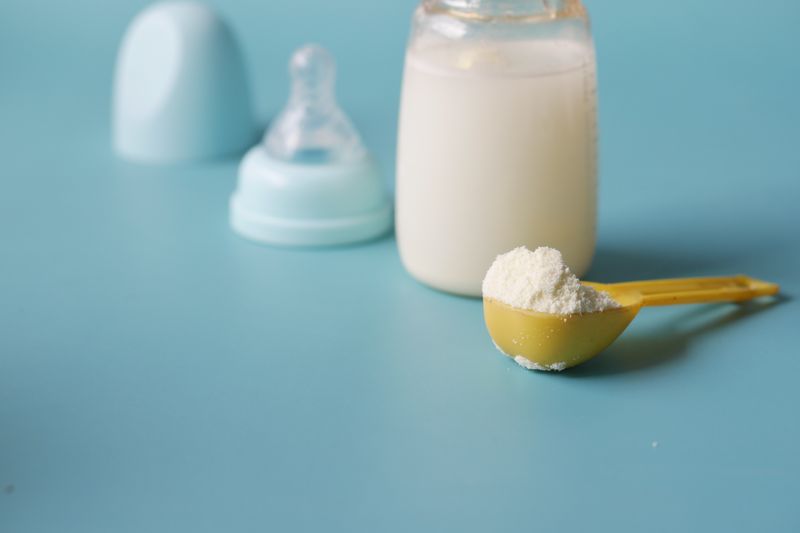
The hazard in warming is uneven heating rather than heat itself. Microwaves are discouraged mainly because they produce hot pockets that a shaken bottle does not fully even out.
Standing a bottle in warm water heats it slowly and evenly, which is why it remains the standard method. Bottle warmers automate the same principle with a thermostat.
Testing on the inside of a wrist is a crude check, but it catches the case that matters, which is milk hot enough to scald. It does not tell you whether the middle of the bottle is hotter than the outside.
Expressed milk behaves slightly differently
Expressed breast milk separates on standing, and gentle warming plus a swirl brings it back together. Vigorous shaking is usually discouraged, though the reasons given for that vary.
Overheating expressed milk is a genuine loss, because some of its components are heat-sensitive. That is a stronger argument against high heat than anything that applies to formula.
Storage and warming guidance for expressed milk differs between countries and services. A midwife or infant feeding specialist can give you the version that applies locally rather than the version that circulates online.
Questions readers ask
When should allergens be introduced?
This differs by country and has been revised, so take it from the health body where you live. If there is any family history of allergy, speak to a professional first.
My mother says to delay certain foods. Is she right?
She may be describing advice that was current when she was following it. Guidance has changed in several countries, so check the current version published where you live.
Also by Shalu Prasad
- The fourth trimester is a framing, not a diagnosis, and it helps anywayThe Newborn Weeks
- Nobody warns you about the two-week visitor waveThe Newborn Weeks
- The first fortnight at home is a logistics problem nobody set up for youThe Newborn Weeks
- Crying often peaks in the early weeks before it easesThe Newborn Weeks