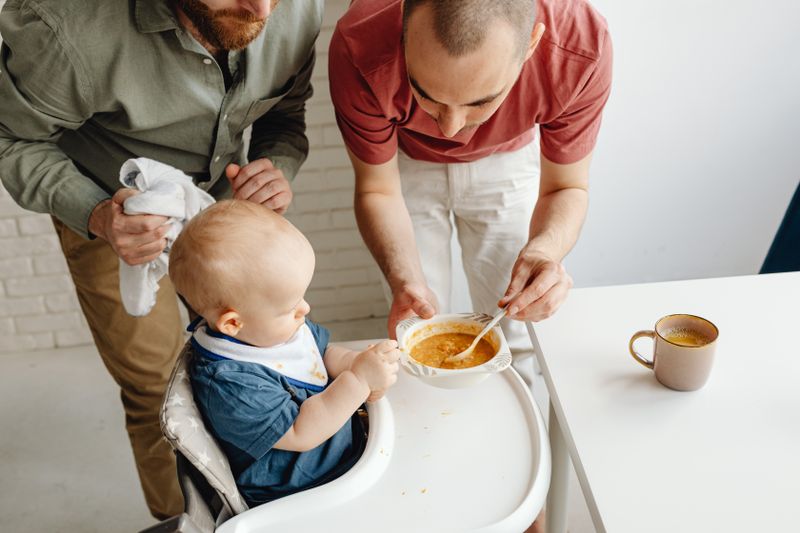
Feeding
Winding is mostly position and patience, not technique
Every relative has a method and each is offered as the definitive one. What actually varies between babies is how much winding they need at all.

The options around winding a baby are set out side by side below, with the conditions that genuinely favour one over the other.
The difference in one place
- Babies differ enormously in how much winding they need.
- Upright position does most of the work; patting adds little.
- Persistent discomfort after feeds is a question for a professional.
What winding is doing
Babies take in some air while feeding, and holding them upright afterwards gives that air a route out rather than leaving it to travel further. The mechanism is not complicated and it is largely gravitational, which is why position matters and vigorous patting adds relatively little.
How much air a baby takes in varies with feeding method, position, teat flow and the individual baby, so the amount of winding needed varies too. Some babies need several minutes after every feed and some appear to need almost none, and both are entirely ordinary. The parents who describe winding as easy usually have the second kind of baby rather than a better technique.
The positions that work
The over-the-shoulder position, with the baby upright against your chest and a hand supporting the head, is the standard and works for most babies. Sitting the baby upright on your lap with a hand supporting the chest and chin is the usual alternative and suits babies who dislike lying against a shoulder.
Laying a baby face down across the lap is the third common option and is worth trying when the other two are not working. The common factor is upright or supported, and there is no evidence that any one of them is superior for all babies. Cycling through two or three positions over a few minutes is more productive than persisting with one that is not working.
Patting, rubbing and folklore
Firm patting, gentle rubbing and upward stroking all have advocates, and none of them is established as better than the others. What is worth avoiding is anything vigorous, since a newborn should not be jolted and firmness adds nothing to the mechanism.
A great deal of winding advice is family folklore passed down with total confidence and no particular basis. Accepting the advice politely and doing whatever works for your baby is usually the path of least resistance with relatives. The one genuinely useful piece of family wisdom is that a muslin over the shoulder saves a change of clothes.
When to stop trying
A common trap is spending twenty minutes trying to produce a wind from a baby who does not have one, at which point everyone is more upset. Five minutes of upright positioning is enough for most babies, and continuing past that rarely produces anything. A baby who is settled and comfortable does not need to be wound simply because a feed has finished.
In the small hours, if they are unsettled, putting them upright again for a while is a reasonable thing to try before assuming it is something else.
Setting a time limit in advance stops the process expanding to fill the evening, which it otherwise reliably does.
Possetting and the mess
Small amounts of milk coming back up after feeds are extremely common in the first months and generate an enormous amount of laundry. The practical response is muslins everywhere, a cloth on your shoulder and accepting that both of you will smell faintly of milk for a while. How much is usual, and when it stops being usual, is a clinical question that depends on the baby and belongs with a health professional.
Anything forceful, anything that concerns you, or a baby who seems uncomfortable, is a reason to contact your health visitor or doctor. This article cannot tell you where the line is, and no article should be used to talk yourself out of asking.
Milestone ranges are wide, and where one baby sits inside a range says very little on its own.
It stops mattering
As babies get better at feeding and spend more time upright during the day, winding gradually stops being an event. Most parents cannot identify when they stopped doing it deliberately, which is a fair indication of how gradually it fades. By the time a baby is sitting independently the whole business has usually resolved itself without any decision being made.
Until then, the useful attitude is that winding is worth a few minutes and not worth an argument. Nobody has ever looked back on the first year and wished they had spent longer patting a baby's back.
Side by side
| Consideration | What it means in practice |
|---|---|
| What winding is doing | Babies differ enormously in how much winding they need. |
| The positions that work | Upright position does most of the work; patting adds little. |
| Patting, rubbing and folklore | Persistent discomfort after feeds is a question for a professional. |
The takeaway
Hold them upright for a few minutes, try a second position if nothing happens, and keep a muslin on your shoulder throughout.
Nothing in the first year lasts, including the parts that feel permanent at three in the morning.
Questions readers ask
What if the baby will not bring up wind?
Some babies simply do not have one. Five minutes upright is enough for most, and continuing much beyond that rarely achieves anything.
How much milk coming back up is normal?
Small amounts after feeds are very common, but where the line sits depends on the baby. Anything that worries you should go to your health visitor or doctor.