The Newborn Weeks
Why Newborns Cannot Hold Their Own Temperature
A large surface area, thin insulation and no shivering response mean a newborn loses heat quickly, which is why so much early care is about warmth.
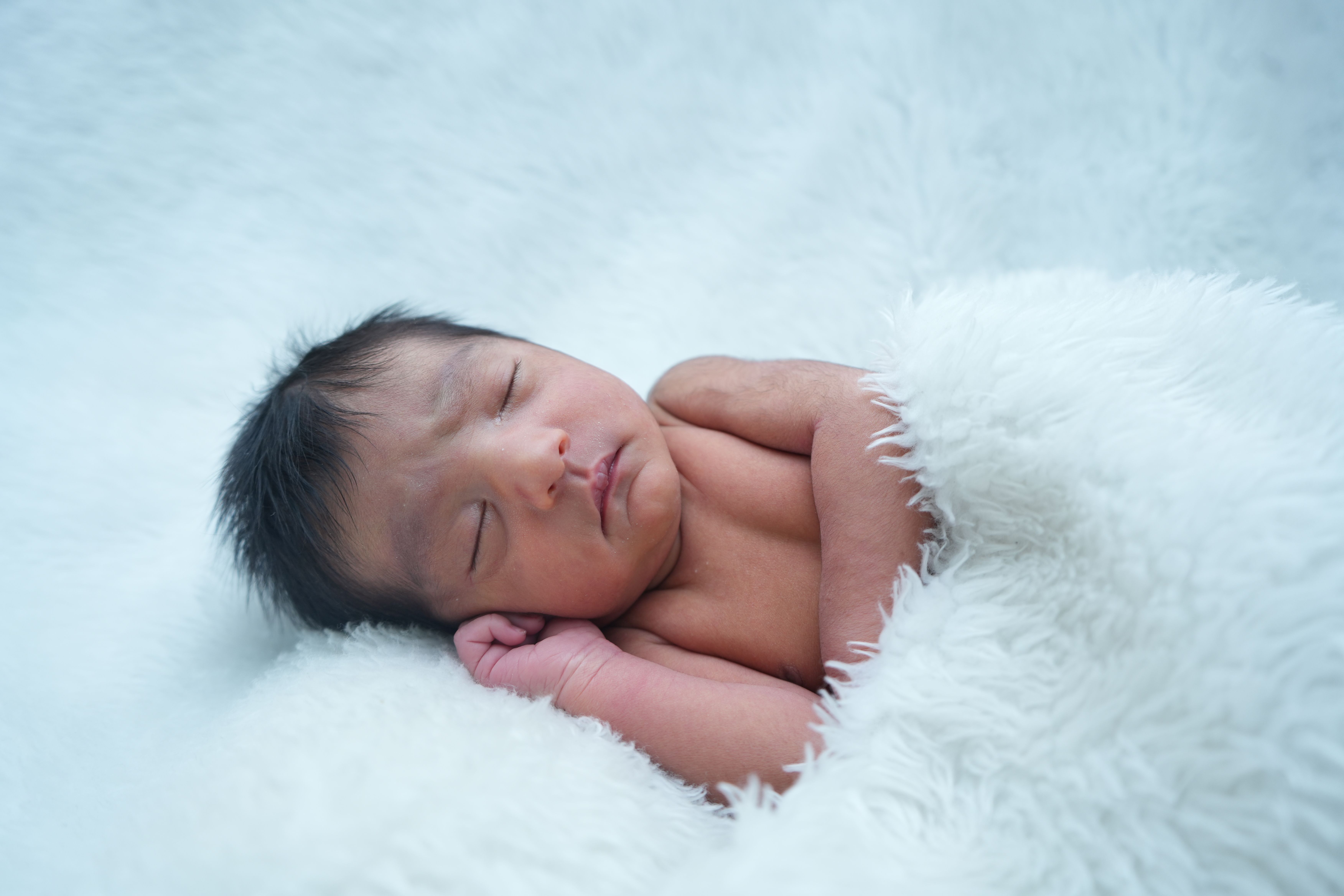
A great deal of newborn care is really temperature management, from hats in the delivery room to the emphasis on skin contact. The reason is that a newborn is unusually bad at holding heat.
The geometry works against them
Heat is lost across a surface and generated within a volume. A small body has a large surface area relative to its volume, so it loses proportionally far more heat than an adult does.
The head is a large fraction of that surface in a newborn, which is why it features so heavily in early advice. Wet skin makes it worse still, since evaporation removes heat quickly.
This is why drying a baby immediately after birth is one of the first actions taken. It closes off the fastest route of loss.
The heating system is different too
Adults generate heat mainly by shivering, which newborns do not do effectively. Instead they rely on a specialised tissue laid down before birth that produces heat directly.
That tissue is limited in quantity and is consumed when used, so it is a reserve rather than a system. Babies born early or small have less of it.
Producing heat this way also burns energy, which is why a cold baby can become a baby with feeding and blood sugar problems. The two are connected.
Skin contact is a heat transfer method
An adult chest is a large, warm, temperature-regulating surface, and a baby placed against it is warmed from a source that adjusts. This is one of the concrete reasons skin-to-skin is encouraged.
It also removes the air gap that clothing and blankets only partly close. Direct contact conducts heat far more efficiently than trapped air.
Covering the pair with a blanket keeps the warmed air in place, which is why the combination is described rather than skin contact alone.
Overheating matters in the other direction
The same poor regulation means a newborn also struggles to shed heat, and cannot remove a blanket or say so. Overheating is a recognised risk factor in safe-sleep guidance.
Room temperature ranges and layering advice exist to keep families out of both ends of that problem. Feeling the chest or back of the neck is more informative than feeling hands, which run cool normally.
A newborn who feels unusually cold or hot, or who is unusually sleepy or floppy, needs medical assessment rather than adjustment of clothing. Temperature instability in a newborn can be a sign of infection.
Questions readers ask
When will my baby get into a routine?
The range is wide enough that no useful average exists. Some settle into a rough pattern within a couple of months, others take considerably longer, and both are ordinary.
Should I wake a newborn to keep to a schedule?
Whether and when to wake a baby for feeds is a clinical question that depends on the individual baby. Ask your midwife or health visitor rather than following a general rule.
Also by Ekta Ranjan
- Newborns make far more noise asleep than anyone tells youThe Newborn Weeks
- Who checks on a newborn in the early weeks, and what they are looking atThe Newborn Weeks
- Skin-to-skin costs nothing and is the least complicated thing in the dayThe Newborn Weeks
- Partners get a smaller share of everything, including the supportLooking After Parents