Sleep
Room Temperature Matters More Than The Blanket
A baby's total warmth is the sum of room temperature and layers, and the room is easier to control than a covering that moves during the night.

Discussions of night-time warmth focus almost entirely on what a baby wears or is covered with. The room is the larger and more stable variable, and it is the one that keeps working while everybody sleeps.
Warmth is a total, not a single item
How warm a baby is depends on air temperature, the insulation of clothing and bedding, and air movement. Adjusting one without knowing the others produces guesswork.
Sleepwear designed for babies is rated for its insulation, which allows layers to be chosen against a measured room temperature rather than against how the room feels to an adult.
Adults are poor thermometers, since our own comfort depends on activity, clothing and what we were doing beforehand. A cheap room thermometer removes that variable entirely.
A covering moves and a room does not
Blankets shift during the night, get kicked off, or get pulled upward. The insulation they provide is therefore not constant, and its variation is unmonitored while everyone is asleep.
Fitted sleepwear keeps insulation attached to the baby, which is why sleeping bags and suits became the standard recommendation in many countries. The warmth stays where it was put.
Loose bedding also carries its own safe-sleep concerns around covering the face, which is a separate argument pointing in the same direction.
Overheating is treated seriously
Safe-sleep guidance names overheating as a risk factor, which is why recommended room ranges exist at all. Babies cannot remove layers or move away from a heat source.
Radiators, direct sunlight through a window during a daytime nap, and hot weather all raise local temperature well above what a thermostat reports elsewhere in the house.
Illness complicates it further, since a baby with a fever generates additional heat. Adding layers to a hot baby is a common instinct and the wrong direction.
Checking is done on the torso
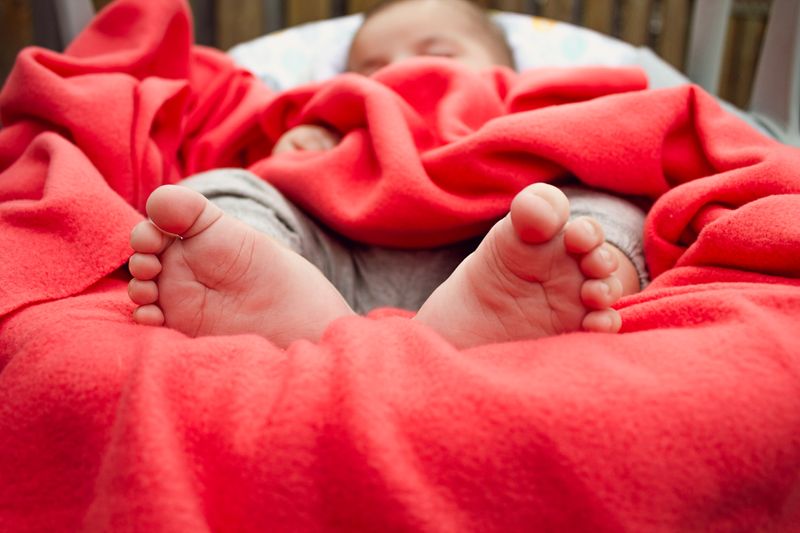
Hands and feet run cooler than the core in babies and are a poor indicator. The chest, back or back of the neck reflect core warmth much more reliably.
Sweating, damp hair, flushed skin or rapid breathing suggest a baby is too warm, and those are more informative than any single reading.
Recommended temperature ranges and clothing guidance differ between countries and are revised over time, so a health visitor or your national health service is the source to use.
Questions readers ask
Does a bedtime routine need a bath every night?
No. Nightly bathing is not required in most guidance and plenty of households bath every few days. The value is in the predictable sequence rather than any single step.
How long before it starts working?
Longer than most parents expect, because the baby has to learn the signal. Weeks rather than nights is a more realistic frame.